
China · 2 of 15
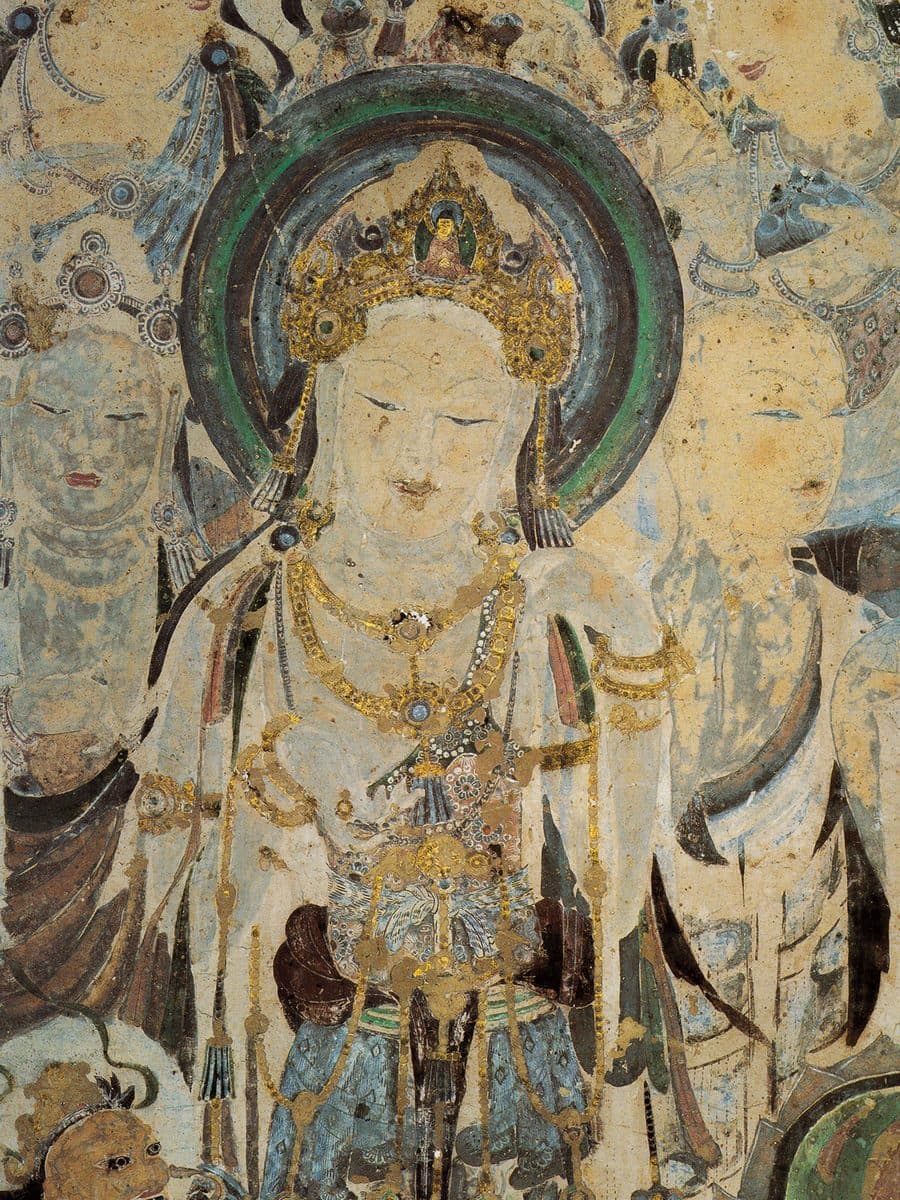
Avalokiteśvara with Worshipping Bodhisattvas
Unrecorded painters · Early Tang dynasty (618–907)
- Maker
- Unrecorded painters
- Date
- Early Tang dynasty (618–907)
- Medium
- Mural
- Collection
- Mogao Caves, Cave 57, south wall, Dunhuang, Gansu
- Licence
- Public domain
- Source
- Wikimedia Commons
A bodhisattva on the south wall of Cave 57 at Dunhuang, where the Silk Road paid for its art in devotion.
Dunhuang sat at the throat of the Silk Road, the last watered town before the desert and the first after it. Merchants, monks and envoys passed through in both directions for a thousand years, and many of them paid for a cave.
The result is the Mogao complex: several hundred decorated grottoes cut into a cliff, painted continuously from the fourth century to the fourteenth. This figure is on the south wall of Cave 57, from the early Tang — a period so admired for its faces that the cave is nicknamed for them.
The bodhisattva is Avalokiteśvara, who hears the cries of the world, and the painting shows exactly why the Tang treatment became the benchmark. The line is unhurried. The jewellery is described in fine gold detail without the figure becoming a mannequin for it. The face is turned slightly down and inward, absorbed rather than performing.
No painter is named. The Mogao murals were made by workshops, over generations, for donors whose names were sometimes recorded when the artists' were not — a hierarchy of credit worth noticing, since the donors bought the wall and the workshops made the art.
The caves were sealed, forgotten, and reopened at the turn of the twentieth century, at which point a great deal left China in the luggage of foreign expeditions. What remains on the wall at Cave 57 has been there, unmoved, for something like thirteen hundred years.