
Malaysia · 10 of 15
Pua kumbu, Iban ritual cloth
Unrecorded Iban weaver · 19th century
- Maker
- Unrecorded Iban weaver
- Date
- 19th century
- Medium
- Handwoven cotton, warp ikat
- Collection
- The Textile Museum, George Washington University
- Licence
- Public domain
- Source
- Wikimedia Commons
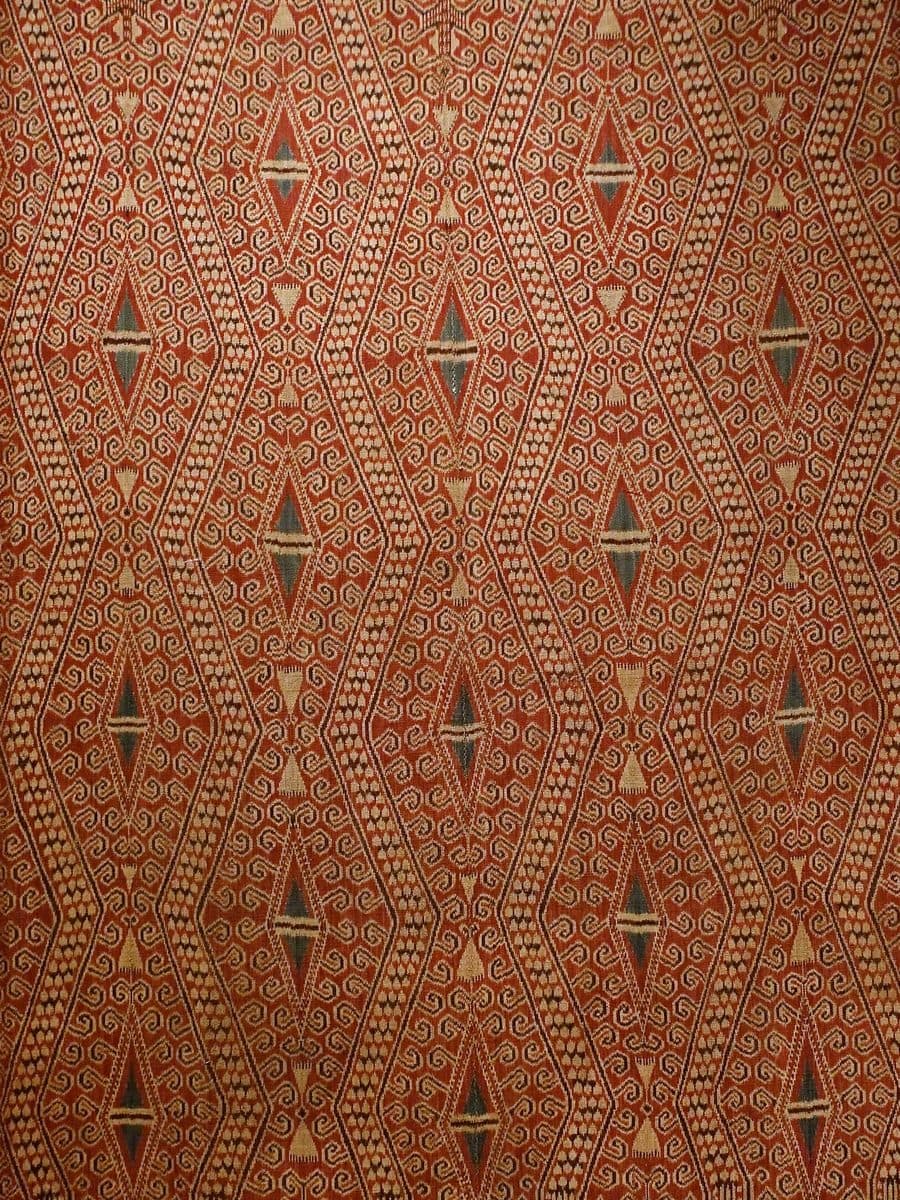
An Iban ritual cloth from Sarawak, woven by a woman whose name the museum record does not carry.
A pua kumbu is a ceremonial cloth, warp-ikat, cotton, woven on a backstrap loom by Iban women in Sarawak. The technique binds and dyes the warp threads before weaving, so the pattern exists in the thread before the cloth does. Any error is already permanent by the time the loom is strung.
The cloths were not decorative. They were used at births, at rituals, to wrap and to receive, and the most powerful designs were understood to carry real danger — not every weaver was considered able to take one on, and attempting a pattern beyond your standing was a serious matter rather than a stylistic overreach.
Ethnographers of the Iban have long recorded that weaving was described in the same terms as men's warfare, sometimes translated as the women's warpath, and that significant patterns were received in dreams. Both of those framings come from the community's own account of the practice, not from an outside reading of it.
This example is from the Baleh region and dated to the nineteenth century, in the rust-red and cream that comes from natural dyeing, with the field worked in dense diamond and hook forms.
The weaver is unrecorded. That is the ordinary condition for textiles in Western museum collections — the object is catalogued by people, region and period, and the maker, who was a specific woman with a reputation, is not. It is held by the Textile Museum at George Washington University.