
France · 4 of 15
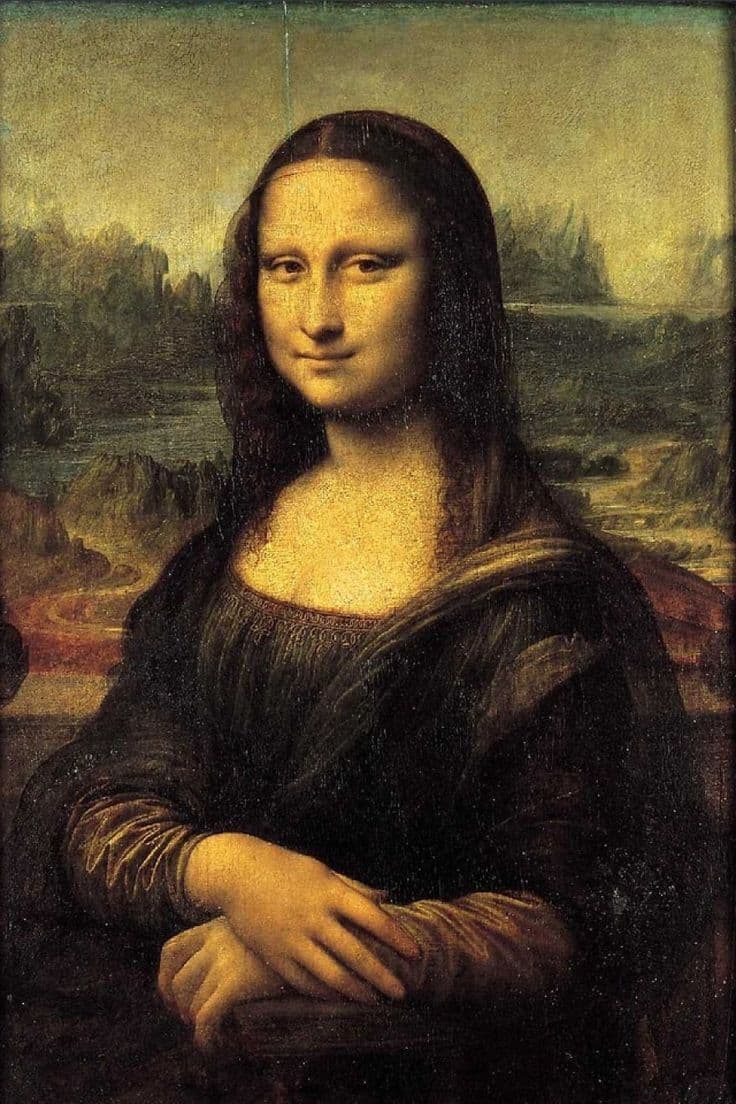
Portrait of Lisa Gherardini, known as the Mona Lisa
Leonardo da Vinci · 1503–1519
- Maker
- Leonardo da Vinci
- Date
- 1503–1519
- Medium
- Oil on poplar panel, 79.4 × 53.4 cm
- Collection
- Musée du Louvre, Paris — INV 779
- Licence
- Public domain
- Source
- Louvre collections
The most famous painting on earth, in a collection that is pointedly looking somewhere else.
The Louvre's record is unglamorous and precise: portrait of Lisa Gherardini, wife of Francesco del Giocondo, oil on a poplar panel, 79.4 by 53.4 centimetres, painted by Leonardo between 1503 and 1519, inventory number INV 779.
It is a small painting. People are routinely surprised by that, having arrived expecting something the size of its reputation.
It earns a place here precisely because it is the outlier. Fourteen of the works in this collection are Asian, several of them made by people whose names were never written down, most of them unknown outside a specialist readership. The fifteenth is the single most reproduced image in the history of art.
And its fame is not purely a verdict on its quality. The painting was admired but not singular for centuries; it became a global icon after it was stolen from the Louvre in 1911 and spent two years missing, its empty hook photographed and printed everywhere. Fame compounded on fame. Reproduction bred reproduction.
That is a useful thing to hold in mind while walking the rest of this collection. A pua kumbu whose weaver is unrecorded, a Tang mural made by an unnamed workshop, a fifth-century rock painting arguing with itself about who its subjects are — these are not lesser works. They are less amplified ones. The difference between the two is mostly the accident of what got photographed, stolen, printed and repeated until the world agreed it mattered.